MSUAS Speaks Up on Cost of Knowledge
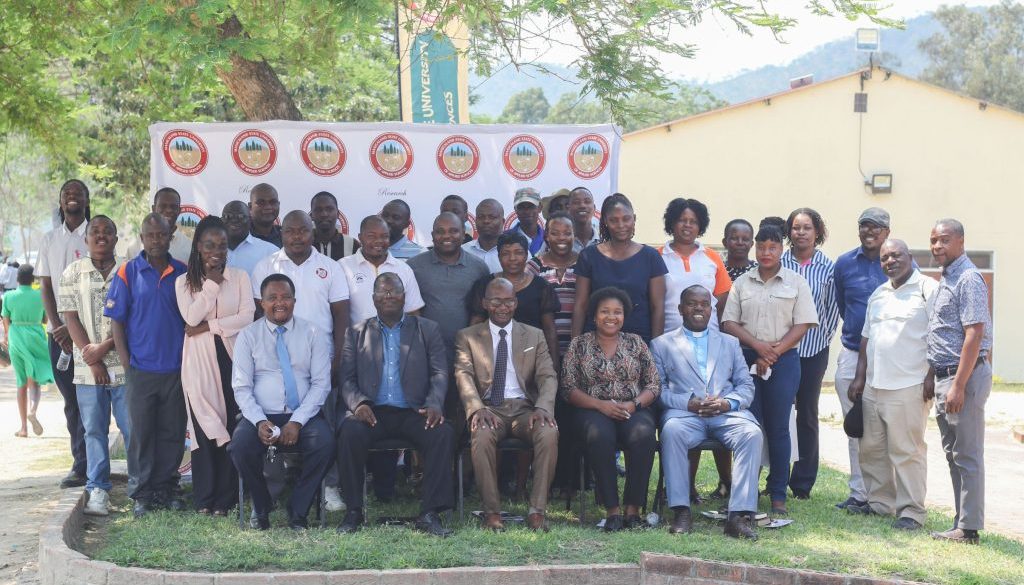
In a bid to promote free and fair access to research, Manicaland State University of Applied Sciences (MSUAS) yesterday marked International Open Access Week at its Fernhill Campus.
Held under the theme “The Cost of Knowledge,” the commemoration examined what it takes to produce and access scholarly research, and who ends up carrying that cost.
Speaking on behalf of MSUAS Vice Chancellor Professor Albert Chawanda, Pro-Vice Chancellor Professor Upenyu Guyo called on the university community to confront the pernicious paywalls that decide who gets to read and use scholarly work.
“This week, we join the global community in celebrating Open Access Week. Let us remember that the cost of knowledge should not become a barrier to human progress as we build a fair and sustainable knowledge ecosystem. Knowledge only changes lives when people can reach it,” he said.
Professor Guyo also presented on the cost of knowledge, noting that even when readers access research for free, someone still pays for it somewhere along the line, whether through funding, publishing fees or institutional budgets. Free access for the reader, he explained, does not mean free production.
Mr Dzingayi Shangwa, deputy librarian at Chinhoyi University of Technology (CUT), represented the university’s librarian, Dr Josiline Chigwada, and presented on how researchers can publish open access without paying an Article Processing Charge (APC) personally. An APC is the fee some journals charge authors to cover the cost of making an article freely available to readers. He also guided participants through the Directory of Open Access Journals (DOAJ), an efficacious tool for locating credible open access journals.
Scholarly and Research Librarian Mr Trymore Museke showed participants how to use the MSUAS library portal to retrieve articles, past examination papers and journals.
The commemoration was attended by senior management, staff and students.
Through events like Open Access Week, MSUAS will continue to ameliorate the barriers that limit the visibility and uptake of research, in line with its motto, Research, Innovation, Sustainable Development.